
Bussolà buranello: the Venetian dessert born among fishermen
Bussolà Buranello It's a traditional Venetian dessert that originated on the island of Burano, amidst fishermen and lagoon life. This simple yet rich cookie tells a story of tradition and necessity.
Announcements
In this article, you'll discover the origins, characteristics, and secrets of its authentic preparation and its unique, unmistakable flavor, still appreciated today in local pastry making and contemporary Italian gastronomic culture.
In this article you will discover:
- Origin and history of the Burano dessert
- Ingredients and nutritional characteristics
- Differences with other Venetian sweets
- Detailed traditional recipe
- Practical tips for perfect success

What is the Bussolà Buranello and why is it unique?
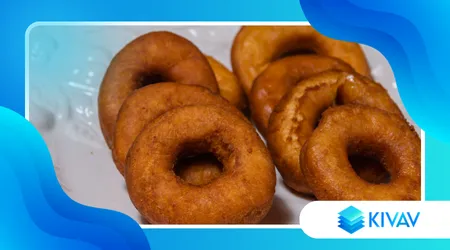
The Bussolà Buranello It's a ring-shaped biscuit, with a firm texture and an intense buttery vanilla aroma. It was originally intended as an energy source for fishermen and sailors.
Its structure is no accident. The ring shape allowed for longer shelf life and facilitated transport during offshore fishing trips.
Announcements
Today, it's still artisanally produced in local pastry shops, following recipes passed down orally. Despite the simplicity of the ingredients, the result requires technical precision.
Historical origins: a dessert born to last
In the context of the Venetian lagoon, fishermen needed nutritious and moisture-resistant foods. Bussolà Buranello It responded perfectly to these practical needs.
The first evidence dates back to the period of the Venetian Republic, when the families of Burano prepared large quantities of biscuits to be preserved for weeks.
According to local cultural sources, the tradition is still promoted today by regional bodies such as the official portal of Veneto tourism, which promote sweets as a symbol of identity.
Main ingredients and nutritional values
The original recipe uses few, but high-quality ingredients. The balance of fat and sugar ensures a long shelf life and a rich flavor.
Basic ingredients
- Soft wheat flour
- Butter
- Sugar
- Egg
- Vanilla or lemon zest
- Salt
Nutritional table (average values per 100g)
| Component | Average quantity |
|---|---|
| Calories | 420 kcal |
| Carbohydrates | 55 g |
| Fats | 20 g |
| Proteins | 6 g |
| Sugars | 18 g |
These values reflect a type of energy biscuit, historically designed to provide physical endurance during strenuous activities.
++ Traditional Italian desserts revisited in a modern key
Differences between Bussolà and other Venetian desserts
Many confuse the Bussolà Buranello with other typical products of the lagoon, but there are evident differences in the original structure and function.
Bussolà vs Esse buranelli
The "S" ones are S-shaped and more crumbly. The Bussolà, on the other hand, is more compact and designed to last over time without losing its consistency.
Bussolà vs. Zaleti
Zaleti contain corn flour and raisins. Bussolà maintains a simpler and more straightforward recipe, without complex additional ingredients.
Interesting: Pignolata Messina with honey and lemon: the lesser-known version
These differences are not only aesthetic, but reflect distinct historical contexts and customs within Venetian cuisine.
Traditional recipe for Bussolà Buranello
Prepare the Bussolà Buranello At home, it requires attention to detail, especially in kneading the dough and ensuring even cooking.
Ingredients (for about 20 biscuits)
- 500 g of 00 flour
- 200 g of sugar
- 150 g of soft butter
- 3 eggs
- 1 vanilla pod or lemon zest
- 1 pinch of salt
Step-by-step procedure
Start by mixing the butter and sugar until smooth. Add the eggs one at a time, mixing vigorously to avoid lumps.
Add the sifted flour, salt, and seasonings. Knead the dough until it's smooth and compact, but not too hard.
Shape the dough into cylinders and seal them into a ring shape, maintaining a uniform thickness. This step is essential to ensure even cooking.
Arrange the cookies on a lined baking sheet and bake at 180°C for about 20–25 minutes, until lightly golden. Avoid overbaking, as this will dry out the cookies.
++ Robiola di Roccaverano DOP: a goat's cheese to discover
Let cool completely before drinking. The flavor improves after a few hours, when the aromas stabilize.

Technical advice for an authentic result
To get a real Bussolà Buranello, The quality of the butter is crucial. Use butter with a high fat content to ensure flavor and structure.
Don't overwork the dough after adding the flour. Overworking develops the gluten and makes the cookie less crumbly.
Storing them is simple: keep them in an airtight container. They can last up to two weeks without losing quality, just like the original tradition.
Here are two topics with subtitles in Italian, ready to be inserted at the end:
The role of Bussolà in family tradition
Bussolà buranello is not just a dessert, but a central element in Burano family traditions.
It was prepared during special occasions and shared between generations, strengthening emotional and cultural bonds.
Each family has its own small variations of the recipe, passed down orally over time.
Even today, home preparation represents a moment of unity, where simple gestures take on a profound symbolic value, keeping alive an authentic tradition rooted in the Venetian territory.
How to recognize an authentic Bussolà
Recognizing an authentic Buranello Bussolà requires attention to precise details. The shape should be regular, slightly golden, and firm to the touch.
The aroma should be naturally reminiscent of butter and vanilla, without artificial flavors. The bite should be crumbly yet firm.
Industrial products often lose these characteristics, offering a drier texture.
For this reason, choosing artisanal versions guarantees an experience more faithful to the original Venetian tradition.
Conclusion
The Bussolà Buranello It tells a tangible story of work, the sea, and daily needs. It's not an elaborate dessert, but a perfect example of functional cuisine that has become a tradition.
Preparing it today means rediscovering ancient knowledge and better understanding Venetian gastronomic culture, which strikes a balance between taste and practicality.
To learn more about the historical value of Italian regional cuisine, you can consult the cultural documentation of the Italian Academy of Cuisine, an authoritative point of reference in the sector.
Frequently Asked Questions
Is the Bussolà buranello hard or soft?
It has a firm but not overly hard consistency. It should be crumbly to the bite, while maintaining a solid structure.
How long does the Bussolà buranello last?
If stored properly, it can last up to two weeks without losing quality, thanks to its low moisture content.
Can it be flavored in different ways?
Yes, in addition to vanilla, lemon or orange zest is often used, always respecting local tradition.
Is it suitable for breakfast?
Absolutely. It's ideal with tea, milk, or coffee, thanks to its balance of sweetness and texture.
++ The history of Bussolai Buranelli, Venice's traditional biscuits.
++ The history of the compass-makers of Burano
