
Umbrian bastard lasagna with wheat flour and eggs
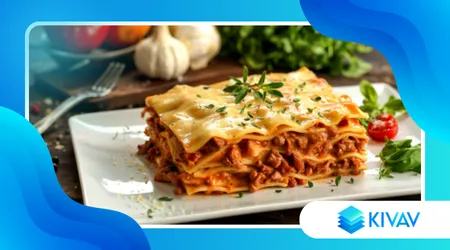
The Umbrian bastard lasagna they bring with them the rough charm of the earth.
Announcements
They're not a refined dinner table dish, but a tangible testament to how peasant ingenuity ennobled scarcity, mixing different flours to create a pastry that tastes of wheat, woodland, and toil.
Article summary
- Historical roots and the identity of “bastardita” pasta.
- Alchemy between wheat and eggs: the 2026 technique.
- Umbria and Tuscany: a necessary distinction.
- Secrets for excellent rustic puff pastry.
- The evolution of contemporary condiments.
- Technical and nutritional data.
- FAQ: Answers to the most common questions.
What really defines the origin of this pasta?
People often make the mistake of considering cucina povera as simple cuisine. On the contrary, Umbrian bastard lasagna They arise from a complex need: to extend the shelf life of soft wheat flour by combining it with what the territory had to offer.
In the Apennine areas between Gubbio and Città di Castello, the “bastardaggine” of the pastry came from the use of chestnut or buckwheat flour.
This was not an aesthetic choice, but a biological necessity that gave the pasta a brownish hue and an almost smoky fragrance.
Announcements
Today, looking at the gastronomic landscape of 2026, we are witnessing a conscious return to these blends.
It's no longer about saving on wheat, but about seeking out that aromatic complexity that refined industrial flours have sadly dulled over the decades.
The term “bastard” thus loses all negative connotations and becomes a mark of authenticity.
It is a label that claims imperfection as a value, clearly distinguishing this preparation from the more uniform Emilian or Campanian versions.
Why is the combination of wheat and eggs a matter of chemistry?
Making a pastry that can withstand rich sauces is no easy task.
In the Umbrian bastard lasagna, the protein component of the egg acts as a vital glue to hold together grains that often have less elastic gluten networks.
There is something almost ancestral about the moment the eggs are absorbed by the flour.
It's not just a matter of color; the egg provides a rich lipid content that helps balance the crude fiber of the whole-wheat or alternative flours used in the mix.
Many people underestimate the denaturation of proteins during boiling. In this recipe, the egg seals in the starch, preventing the lasagna from turning into a soft, shapeless mass when it encounters the heat of the oven and the moisture of the béchamel or ragù.
The “al dente” consistency, so dear to Italian tradition, finds its maximum expression here.
++ Vicenza-style rice and peas: a mix of soup and risotto, a symbol of the Veneto region.
A pastry that doesn't resist biting into it is, in this context, a technical failure that betrays the very spirit of Umbrian cuisine.
How to approach the preparation of puff pastry
Starting from the classic flour fountain on a wooden surface is a gesture that reconnects with the material.
For the Umbrian bastard lasagna, the manipulation must be vigorous, almost as if trying to tame a mass that offers a natural initial resistance.
The dough needs to rest. This is where many people make mistakes due to haste.
Letting the dough relax under a tea towel allows the water molecules to evenly hydrate each grain of flour, making the final rolling out infinitely easier.
Don't aim for extreme transparency. Too thin a sheet of pasta will vanish under the weight of typical sauces, such as wild boar or Chianina beef ragù.
The rolling pin must leave a firm mark, maintaining a thickness that can be felt under the palate.
Cutting the rectangles with a certain irregularity is a quirk that underlines the artisanal nature of the process.
Each piece of pasta tells a different story, collecting the sauce in a unique way thanks to the natural porosity obtained with the use of wood.
For those who wish to delve deeper into the classification of historical grains, the’ Italian Academy of Cuisine offers a detailed overview of the varieties that are making a comeback in the pantries of top chefs.

Which condiments honor this tradition?
It is often thought that lasagna necessarily requires tomato, but the Umbrian version often prefers “white” tomatoes.
A farmyard ragù, made with chopped lard and herbs, enhances the wild nature of the pasta without overpowering its wheaty flavor.
The addition of Norcia black truffle or porcini mushrooms transforms this dish into a complete sensory experience.
In these cases, the pasta acts as a stage for the flavors of the forest, creating a balance between the sweetness of the egg and the intensity of the earth.
Find out more: Neapolitan Minestra Maritata: An Ancient Balance of Vegetables and Meat
The béchamel should be a discreet presence, a velvety caress that aids cooking but does not dominate the scene.
The goal is for the layers to hold together, not for them to be immersed in a milky sauce that would erase their rustic texture.
An often misunderstood element is the cheese. Using a pecorino that's too young would be a mistake; it needs to be aged to deliver a sharp, bold note, capable of interacting with the robust structure of this particular pastry.
Technical Analysis and Proportions
This table summarizes the balance needed to achieve a result that respects the canons of modern Umbria.
++ Calabrian Cudduraci: Traditional Easter Braided Sweets
| Analysis Element | Ideal Value | Notes of Merit |
| Flour/Egg Ratio | 100g: 1 Egg | The golden rule for keeping |
| Additional Hydration | 0% – 5% | To be used only if the flours are very dry |
| Kneading Time | 12 – 15 minutes | Essential for the development of gluten |
| Bite Resistance | High | Distinctive feature of the dish |
| Degree of Porosity | Medium-High | Obtained by manual application on wood |
When to bring this masterpiece to the table?
This isn't a quick dish. Preparing this recipe requires time and dedication, making it perfect for those times of year when socializing becomes the center of the day, especially on cold autumn Sundays.
Accompanying everything with a full-bodied red, perhaps a Sagrantino, is almost a moral obligation.
The strength of the tannin cleanses the palate from the fattiness of the sauce, preparing the mouth for a new encounter with the earthy texture of the pasta.
Serving this dish also means educating your guests. There's a narrative behind every layer, a nod to a time when nothing was wasted and everything was transformed into something new, bold, and, indeed, proudly bastard.
The satisfaction of cutting the first slice, observing the perfect layering of pasta and ragù, more than makes up for the hours spent crafting the dough. It's an affordable luxury that celebrates the true essence of the Mediterranean diet.
Agricultural sector trends and quality certifications are constantly updated by Ministry of Agriculture, Food Sovereignty and Forestry, a point of reference for those seeking the traceability of raw materials.

FAQ – Frequently Asked Questions
Why are they called “bastards”?
The name comes from the blend of different flours. Originally, wheat flour was combined with chestnut flour or other less noble varieties, creating a "hybrid" product.
Is it mandatory to use a pasta machine?
No, on the contrary. For this recipe, rolling out the dough by hand with a wooden rolling pin is highly recommended to maintain the porosity needed to hold the typical Umbrian sauces.
Can I make them without eggs?
The traditional version calls for egg to bind the different grains. Without it, the pasta would tend to fall apart, losing the robust consistency that is the dish's trademark.
What's the secret to perfect gratin?
A thin layer of butter and a generous sprinkling of aged pecorino cheese in the last five minutes of the oven ensure that crispy crust that contrasts with the softness inside.
Can they be prepared in advance?
Absolutely. The flavor often stabilizes and improves if the pan is assembled a few hours in advance and then baked just before serving.
++ Bastard lasagna from Lunigiana, bastard but good
