
Perfect Emulsification Techniques for Modern Italian Sauces
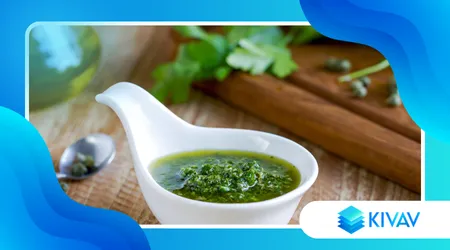
Get a’perfect emulsion for modern Italian sauces represents today the main challenge for every chef who wishes to elevate traditional flavours to new gourmet heights.
Announcements
In this guide, we'll explore the technical evolution of condiments, analyzing how food science has transformed our cuisine's classics into masterpieces of stability, texture, and chromatic brilliance.
We often think of chemistry in the kitchen as an artificial intrusion; on the contrary, it's the key to unlocking the purity of the ingredients we love.
Summary
- The molecular science behind contemporary emulsion.
- Essential tools for the professional kitchen of 2026.
- Differences between natural agents and cutting-edge stabilizers.
- The recipe: Olive Oil and Bergamot Mayonnaise.
- FAQs and tips for flawless results.
What is an emulsion really in today's kitchen?
An emulsion is, in short, the forced union of two liquids that naturally repel each other, such as water and fat.
In contemporary Italian cuisine, this concept transcends the logic of the old, heavy mayonnaise. We're talking about sauces created from clarified cooking liquids, the purest plant extracts, and essential oils that must coexist in a delicate balance.
Announcements
Modernity lies in pinpoint precision. It's no longer enough to simply whisk; you need to understand the rheology of fluids to ensure a sauce stays velvety and glossy under the lights, without separating or creating that annoying greasy film on the plate.
The technique: how to achieve stability and silkiness
To achieve excellent results, thermal management is the real difference between an amateur experiment and haute cuisine.
Fats must be incorporated with almost ritualistic patience, maintaining the base between 45 and 55 degrees Celsius. It is in this range that the proteins open up and accommodate the lipid molecules without becoming "stressed.".
The use of ultra-high-speed mixers—which consistently exceed 30,000 rpm in 2026—allows the fat particles to be pulverized. The result?
++ Italian cooking techniques for small spaces and modern kitchens
A consistency so fine that it is almost ethereal on the palate, a sensory experience that a hand whisk can never replicate.
The choice of raw materials: not just flavour
The chemical composition of Italian extra virgin olive oil is a structural pillar. Its polyphenols not only delight the palate, but also act as natural stabilizers.
The impact of oil quality on the mechanical resistance of a sauce is often underestimated: a “tired” or low-quality oil will tend to separate much more quickly.
Using ingredients with natural lecithin, such as free-range egg yolks or even chickpea cooking water, promotes gravity-resistant bonds.
Find out more: Induction cooking techniques for perfect Italian recipes
An excellent raw material provides the physical basis for the incorporated air to create a light yet durable structure.
Beyond the Egg: Emulsifiers and Hydrocolloids
Today's culinary landscape integrates tradition with the conscious use of hydrocolloids.
Substances like xanthan gum or agar-agar are often viewed with suspicion, but if used wisely, they are formidable allies for maintaining viscosity without covering the original flavors.
The use of flaxseed gel or pea protein is gaining ground, allowing you to create low-calorie, plant-based dressings with the same creaminess as fatty bases.
For those who would like to delve deeper into the biochemistry behind these interactions, ScienceDirect offers illuminating studies on the stability of colloidal systems.
Technical Analysis of Stabilizers in 2026
Here is an overview of the molecular tools a modern chef should master to manage textures without altering the soul of the dish.
| Emulsifying Agent | Origin | Use | Characteristic |
| Sunflower Lecithin | Seeds | Cold | Perfect for “airs” and light foams |
| Xanthan Gum | Fermentation | Universal | Extreme stability at minimal doses |
| Agar-Agar | Algae | Heat | For jellies that don't melt immediately |
| Isolated proteins | Vegetable | Hot/Cold | Binding power for vegan sauces |
Vacuum packing: the secret to zero oxidation
The vacuum technique has become essential for preparing the purest bases. By infusing aromas in an anaerobic environment, we obtain flavored oils that retain their vibrant color.
++ Italian vegetarian appetizers with seasonal local ingredients
When these oils meet the aqueous part, the resulting emulsion is as shiny as a mirror, free of superfluous air bubbles that would dull its appearance.
Practical Example: Modern Bergamot Mayonnaise
This is not the classic bar mayonnaise, but a technical sauce that takes advantage of citric acidity and thermal stabilization.
- Base: 2 egg yolks pasteurized at 62°C, 10g of bergamot juice, a pinch of salt.
- Technique: Start blending at medium speed.
- Fat: Gradually pour in 200ml of grapeseed oil (neutral) alternating it with 50ml of delicate cultivar EVO oil.
- The finishing touch: Add 0.2g of xanthan gum to fix the structure and make it indestructible to ambient heat.
Tools and precision: the culinary laboratory
Forget about approximations. Today, ultrasonic homogenizers are used to break down cellular barriers and micron scales are used to weigh every gram of thickener.
A variation of 0.1% can completely change the texture, turning a silky sauce into a rubbery block or, worse, an unstable liquid.
Master the’perfect emulsion for modern Italian sauces it means honoring the past with the rigor of the future.
It's not just aesthetics; it's the ability to convey emotion through textures that caress the palate, making each dish technically flawless and profoundly Italian.
To explore the latest trends that blend technology and taste, the portal of Red Shrimp It remains a reliable compass for every professional or enthusiast.

FAQ
Can I make modern sauces without animal fats?
Absolutely. Using legume water (aquafaba) or dried fruit purees allows for stable, lightweight emulsions, ideal for contemporary, health-conscious cuisine.
Why does my sauce become cloudy after a while?
Cloudiness is often due to the incorporation of too much air or oxidation. Using an immersion blender with a closed bell or the vacuum technique helps maintain the original bright color.
What is the most common mistake?
Too much initial speed. If you add the fat too quickly before the protein bonds have formed, the sauce will inevitably "curdle." Patience is the most important technical ingredient.
How do I recover a separated sauce?
Start a new base with a tablespoon of warm water and a pinch of lecithin, then slowly incorporate the curdled sauce. The structure will recompose thanks to the new surface tension created.
++ How to make an emulsion in the kitchen
