
Calabrian Cudduraci: Traditional Easter Braided Sweets

THE Calabrian cudduraci It's not just biscuits; These are the same architectures that tell us about the resistance of a common identity in full 2026.
Announcements
In each curve of the citric mass, one could perceive the echo of ancient rituals whereby the food was the main language of flavor and promise.
Article summary
- The Greek origin and evolution of the “egg biscuit”.
- Symbolism: Why form trumps flavor.
- Technical analysis of lard shortcrust pastry.
- The definitive recipe: doses and manual secrets.
- How to preserve the fragrance over time.
What are Calabrian cudduraci?
It would be reductive to call them Easter sweets. Calabrian cudduraci represent a bridge between Magna Graecia and modernity, deriving from the term kollura, the crown that the faithful offered to the gods.
If we see them on the tables of Reggio Calabria today, it's because this circular shape has adapted, transforming from a pagan offering to a symbol of Christian resurrection.
Unlike industrial pastry shops, here aesthetic perfection is the enemy of authenticity. The pastry is dense, almost austere, designed to last and support the weight of hard-boiled eggs that seem trapped in shortcrust pastry cages.
Announcements
It's a preparation that ignores current trends to focus entirely on a consistency that tastes of home, of floured hands and the wood-fired ovens that still survive in the villages of Aspromonte.
Why does symbolism surpass taste?
There's something almost magical about seeing a hard-boiled egg nestled in a cake. To the casual observer, it might seem like a bizarre combination, but to a Calabrian, it's the epitome of life.
In ancient times, giving a cuddurace with many eggs was a declaration of economic power and fertility. The more eggs there were, the deeper the bond with the recipient.
The shapes are never random. The heart was a silent message to the betrothed, while the basket wished abundance to the family.
++ Alto Adige Buckwheat Cake: Flour-Free, But Rich in Flavor
It is fascinating to note how, in an age dominated by digital technology, the act of kneading these symbols remains one of the few purely physical and analog acts left intact in Mediterranean culture.

The technical sheet: balance and substance
Despite its apparent simplicity, the balance between fats and sugars is essential to ensure that the dessert doesn't become a block of marble after baking.
Find out more: Sighs of Bisceglie: Apulian sweets with a romantic history
Lard, often viewed with suspicion in modern cuisine, here reclaims its essential role for a crispness that butter cannot replicate with the same intensity.
| Nutritious | Value per 100g | Role in the recipe |
| Carbohydrates | 58 g | Structure and support for eggs |
| Fats (Lard) | 14 g | Responsible for the typical friability |
| Proteins | 7.5 g | Elasticity given by fresh eggs |
| Fibers | 1.8 g | Minimum intake from lightly refined flours |
The Traditional Recipe: How to Make Them Perfectly
For those who want to try their hand at this, patience is the secret ingredient. Don't try to rush things: the pastry needs to rest so that the lemon and anise flavors can fully blend with the flour.
++ Sous Vide Cooking: How to Enhance Asparagus and April Vegetables”
Ingredients for approximately 1.5 kg of dough:
- 1 kg of 00 flour (better if with a small percentage of local flour)
- 400 g of granulated sugar
- 200g lard (or high-quality butter, if you prefer a sweeter taste)
- 4 whole eggs for the dough + hard-boiled eggs for decoration
- 1 sachet of baking powder
- Grated zest of 2 untreated lemons
- A small glass of aniseed liqueur
- A pinch of salt
Procedure:
Place the flour in a mound on a wooden board. Make a well in the center, then add the sugar, lard, eggs, lemon zest, and anise.
Knead vigorously, but without overheating the dough, until you obtain a smooth, compact dough. Let the dough rest for at least 30 minutes under a clean cloth.
Shape the shapes: create ropes of pasta and braid them together, placing the hard-boiled egg (thoroughly washed) in a central point or at the end of the braid.
Secure the egg with two strips of pastry in a cross shape. Brush with egg yolk, decorate with colored sprinkles, and bake at 180°C for about 25-30 minutes, until golden brown.
For further information on excellent raw materials, consult the guides of Red Shrimp.
Territorial variants: a mosaic of names
Moving a few kilometers, the Calabrian cudduraci they change name and, sometimes, character.
Some add bergamot, some prefer olive oil, and some, as in the case of “cuzzupe,” opt for a more pronounced leavening.
This fragmentation is not confusion, but wealth: each family possesses the “true” recipe, defended with a jealousy that borders on the sacred.
The most authentic version remains the one that manages to balance the sweetness of the pastry with the neutral note of the hard-boiled egg, creating a contrast that, although unusual at first bite, quickly becomes an indispensable habit for anyone who has spent at least one Easter in Calabria.
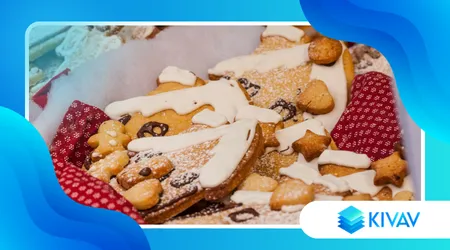
Beyond the Table: A Reflection on Conservation
The charm of the Calabrian cudduraci It also lies in their ability to defy time.
Stored in tins or wrapped in linen, they can last for weeks, making them the perfect companion for your morning coffee or as a snack during your Easter Monday outing.
It's a dessert that's not in a hurry to be consumed, almost as if it wanted to prolong the celebration as long as possible.
The best time to enjoy them? When the dough has had a chance to "settle," at least two days after baking.
During this time, the dough's moisture level uniforms, making each bite a consistent and profound experience. To discover the production specifications and history of these typical products, it's worth visiting the website. Ministry of Agriculture.
FAQ – Frequently Asked Questions and Questions
Why do you put the whole hard-boiled egg?
The egg represents rebirth. Putting it whole, with its shell, is a symbol of protection for life about to blossom, a concept rooted in Easter.
Can I leave out the anise?
Anise is part of the dessert's aromatic identity. However, if you don't like it, you can replace it with vanilla liqueur or simply with more citrus zest, though you'll lose that typical "wild" note.
Can you eat the egg in the dessert?
Absolutely. Even though its consistency changes slightly after baking, it's an integral part of the gastronomic experience, especially during Easter lunch.
Why does pasta split when cooked?
This often happens if the dough is too dry or the oven is too convection-heated. A pinch of milk in the dough can help maintain the right amount of elasticity.
Can I make these in a miniature version?
Yes, but be careful about cooking times. Smaller pieces tend to dry out quickly; reduce the baking time to 15-18 minutes to keep the center tender.
Keeping the tradition alive Calabrian cudduraci it means respecting a rhythm that modern society seems to have forgotten.
It's an invitation to rediscover the beauty of creative hands, of the passing of time, and of the joy born from a simple blend of flour and memory.
++ Cudduraci – Calabrian Easter sweets
++ DISCOVERING TRADITIONAL CALABRESE EASTER SWEETS
