
Vicenza-style rice and peas: a mix of soup and risotto, a symbol of the Veneto region.
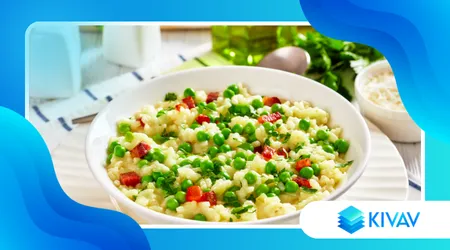
The dish you're about to discover isn't just a throwaway recipe, but a true manifesto of the Vicenza spring.
Announcements
Vicenza-style rice and peas It represents that precise moment when the harshness of winter gives way to the sweetness of the first harvests, uniting the nobility of rice with the peasant simplicity of legumes.
Article summary
- The historical legacy: from the Doge's banquet to the tables of Vicenza.
- The “wave” consistency: the enigma between soup and risotto.
- The secret of broth: why you should never throw away the pods.
- Local specialties: Lumignano peas and Vialone Nano.
- The definitive recipe: technical steps and creaming secrets.
- FAQ: Clarifications for flawless execution.
What exactly is the tradition of Risi e bisi alla vicentina?
Defining this dish simply as “pea risotto” would be a gross error, almost an insult to the technical complexity that characterizes it.
It is a hybrid preparation, a thick soup that must maintain a specific fluidity, known in Venetian and Vicenza technical jargon as “all'onda”.
Historically, its importance was such that it was the main course during the celebrations of San Marco, on April 25th.
Announcements
On that day, the Serenissima celebrated not only its patron saint, but also the ability of the Vicenza lands to produce extraordinary first fruits, capable of delighting the palates of the most demanding rulers.
Why is the Vicenza version considered superior?
Regional variations are often confused, but in the Vicenza area the connection to the land is visceral.
While in Venice the dish took on celebratory connotations, in the Vicenza countryside it became an exercise in circular economy ante litteram, where every single part of the plant finds its purpose.
There is something almost sacred in the way farmers treat the Lumignano pea.
Grown on terraces that enjoy a unique microclimate at the foot of the Berici Hills, this legume has an unparalleled sweetness that defines the entire aromatic structure of the dish.
++ Pasta 'ncasciata Messina: a rich timbale from Sicilian tradition
What are the technical foundations for an authentic result?
The success of this dish depends on a paradox: waste management.
You can't get the true bright green color and that wild aroma without using the cooking water from the pods, a technique that extracts the vegetal soul of the legume before even starting to cook the rice.
The ideal rice is Vialone Nano Veronese PGI. This variety is the only one capable of swelling without falling apart, releasing just the right amount of starch to create the velvety cream that envelops the peas.
Find out more: Fusilli al ferretto with goat ragù: a Lucanian pastoral tradition
Using a different rice would mean transforming a masterpiece of balance into a banal cereal soup.
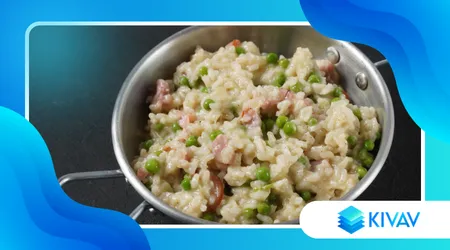
Technical analysis of components (2026 data)
| Element | Quality Requirement | Impact on the Sensory Profile |
| Peas | Fresh harvest (max 24h) | Sweetness and crunchiness of the grain |
| Pods | Free from woody filaments | Chromatic and mineral intensity of the broth |
| Creaming | Alpine butter and 18-month-old Grana | Roundness and savoury contrast |
| Cooking | 16-18 minutes total | Equilibrium between liquid and solid |
How is the real traditional recipe prepared?
Vicenza cuisine doesn't allow for haste. Preparation begins by patiently shelling the peas, separating the kernels from the pods.
The latter, after being thoroughly washed, should be boiled in salted water for about forty minutes; the resulting liquid, filtered and blended, will be the only permitted cooking base.
In a copper or cast iron saucepan, sauté some finely chopped white onion in butter and a small amount of bacon cut into almost invisible cubes.
Add the fresh peas and let them cook for a few moments before adding the rice. Toast briefly to avoid overheating the delicate legume.
Continue adding the green broth little by little, keeping the heat constant. At the end of cooking, with the heat off, the magic happens: the creaming.
A generous knob of cold butter and plenty of Grana Padano DOP will transform the residual liquid into a mirror-like cream. The final result should move on the plate with a flick of the wrist, without resistance.
You can find further information on the certifications of these raw materials on the portal Veneto Agriculture, an organization that protects the biodiversity of the Berici Hills.
What's the perfect wine pairing?
Such a structured yet fresh dish requires a wine that respects its delicacy.
Vespaiolo di Breganze is a traditional companion: its sharp acidity cleanses the palate of the fattiness of the butter, while its hints of almond and white flowers enhance the herbaceous notes of the peas.
If you prefer something more complex, a Pinot Bianco from the Colli Berici will be able to hold its own against the saltiness of the pancetta.
++ Alto Adige Buckwheat Cake: Flour-Free, But Rich in Flavor
The important thing is to avoid overly structured or barrel-aged wines, which would end up covering the aromatic fragility of the spring early fruits.
The Detailed Recipe (Serves 4)
Ingredients
- 300g of Vialone Nano Veronese PGI rice
- 1kg fresh peas (shelled)
- 50g of local stretched bacon
- 1 small white onion
- 60g of mountain butter
- 80g of grated Grana Padano
- Salt, black pepper and fresh parsley to taste.
Procedure
- The Magic Broth: Shell the peas. Boil the pods in 1.5 liters of salted water for 40 minutes. Blend some of the pods with a little water and strain the mixture: you'll obtain a bright green broth.
- The Sauté: In a large saucepan, melt half the butter and sauté the chopped onion and bacon until the bacon becomes transparent.
- The Cooking: Add the shelled peas and a ladle of broth. After 5 minutes, add the rice. Cook until cooked, adding the green broth gradually as it is absorbed.
- The Final Touch: The rice should be cooked but al dente, immersed in a smooth cream. Turn off the heat, add the remaining butter, the Grana Padano, and the parsley. Cover for 2 minutes before serving.
Final reflections
Taste the Vicenza-style rice and peas Today it doesn't just mean consuming a meal, but participating in a collective ritual that resists the standardization of taste.
It's a lesson in gastronomic humility: proof that with water, rice, and an often-overlooked legume, you can reach the pinnacle of European culinary refinement.
To explore the updated list of traditional agri-food products of the area, consult the official website of the Ministry of Agriculture, where Italian quality is catalogued and protected.
FAQ – Frequently Asked Questions
Can I use frozen peas if I can't find fresh ones?
Technically possible, but the result will lack the aromatic intensity afforded by fresh pod broth. The difference is like the difference between a photograph and an oil painting.
Why is my rice too dry?
You've probably treated the recipe like a classic risotto. Remember that this dish should be somewhere in between: if the spoon can stand on its own, you've added too little broth.
Is it necessary to pass the pods through a sieve?
Yes, it's a crucial step to remove the fibrous parts. If you skip this step, the dish will have an unpleasant texture despite its excellent flavor.
Can I replace the bacon with lard?
Lard provides a sweeter, more enveloping fatty component. It's an acceptable alternative in the upper Vicenza area, provided it's well-aged.
What's the secret to the bright green color?
The secret is to avoid letting the pod broth oxidize and to add a handful of parsley only at the last second, while stirring with the heat off.
++ Vicenza-style rice and peas: a mix of soup and risotto, a symbol of the Veneto region.
++ Risi e bisi: a Venetian recipe for rice and peas
