
Ligurian-Style Octopus and Potato Salad: A Timeless Seafood Classic
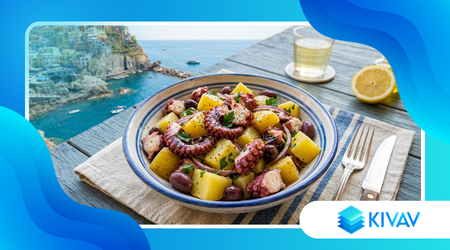
THE'Ligurian-style octopus and potato salad It's not just a dish; it's a tangible testament to how seafood cuisine has managed to ennoble humble ingredients through almost obsessive technical precision.
Announcements
In this analysis, we'll explore how simplicity becomes excellence, debunking myths about cooking octopus and offering a 2026-updated vision of this cornerstone of Mediterranean gastronomy.
Summary
- Maritime identity between land and rock.
- The Riviera octopus: biology and sustainability.
- The science of tenderness: beyond the false myths.
- The architecture of flavor: potatoes and Taggiasco oil.
- Technical recipe: the perfect execution.
- FAQ for the conscious chef.
What is the original Ligurian octopus and potato salad?
Discussing this dish means immersing yourself in a culture that rejects excess. It's often confused with Southern Italian versions, heavy on garlic and parsley, but the Ligurian version thrives on subtleties and nuances.
Here, the balance is dictated by the Taggiasco extra virgin olive oil, which, with its fruity and never spicy notes, acts as an invisible binder between the mineral flavor of the mollusc and the starchy neutrality of the potato.
There is something almost sacred in the way local fishermen treat the raw material.
Announcements
In 2026, awareness of selective fishing has made this dish an ethical luxury, where every tentacle speaks of respect for the biological cycles of the Ligurian Sea.
How to cook octopus until tender?
There's a kind of performance anxiety when it comes to cooking octopus, often fueled by old folk remedies like corking, which have no scientific basis. The reality is much more methodical.
Octopus fiber is rich in collagen; for this reason, cooking must be a slow chemical transformation.
“Scare” the octopus by dipping it three times in boiling water serves primarily an aesthetic purpose: the tentacles curl up, protecting the skin.
The real secret, too often overlooked, is rest. Removing the octopus from the water immediately after cooking is an unforgivable mistake that compromises its tenderness, causing thermal shock to the muscle fibers.
It must cool slowly in its liquid, reabsorbing some of the lost juices.
++ White Cilento aubergines with mushrooms: a little-known variation
It is in this stasis phase that the magic happens: the meat becomes buttery while maintaining a pleasant resistance to the bite, what purists call “nervousness”.
Why is choosing the right potatoes essential?
The potato in this dish isn't just a filler, but a gastronomic sponge. Often, overly floury varieties are chosen, which fall apart, turning the salad into a sort of disjointed purée, a mess of textures.
You'll need a yellow-fleshed tuber, such as the Ligurian Quarantina or Kennebec. These varieties retain their structure even after absorbing the oil and lemon emulsion that characterizes the dish's finish.
An interesting technical approach is to cook the potatoes, cut into regular cubes, in the last few minutes of cooking the octopus itself.
This allows them to take on a slightly pink hue and capture the deep essence of sea water.
To learn more about protected varieties and Italian agricultural seasonality, the portal of Ministry of Agriculture It offers valuable data on protecting the biodiversity of our territories.
Recipe: The masterful execution
This isn't a general guide, but a protocol for honoring the raw material. The quality of the oil isn't optional here; it's the heart of the operation.
Find out more: Fried polenta with Alpine cheese cream: a warm Italian winter appetizer.
Ingredients (for 4 people)
- 1 kg of real octopus (certified local catch).
- 600g yellow-fleshed potatoes.
- Taggiasco EVO oil to taste.
- A bunch of fresh flat-leaf parsley.
- Juice of half a Monterosso lemon.
- Whole sea salt and white pepper.
Procedure
- Bring a large pot of lightly salted water, peppercorns, and a bay leaf to a boil.
- Dip the tentacles three times, then lower the mollusk entirely. Cook for about 35-40 minutes.
- Turn off the heat and let the octopus soak for at least 20 minutes. This step is crucial for the consistency.
- Meanwhile, boil the potatoes in their skins in a separate pot to preserve the starch, then peel and dice them while still warm.
- Cut the octopus into even pieces. Add the potatoes and immediately drizzle with Taggiasco olive oil: the residual heat will help absorb the high-quality fats.
- Finish with finely chopped parsley and a squeeze of lemon just before serving.
Nutrition facts and taste chemistry
Analyze the biochemical profile of the’Ligurian-style octopus and potato salad reveals why we feel so satisfied after consuming it.
++ Spelt flour pizza with tasty seasonal grilled vegetables
It's a perfect match between protein density and slow-release carbohydrates.
| Value (per 100g) | Amount | Biological Function |
| Noble Proteins | 15g | Tissue regeneration |
| Potassium | 350mg | Water and salt balance |
| Carbohydrates | 12g | Constant energy |
| Polyphenols | Elevated | Natural antioxidant |
The addition of Taggiasca olives, although optional in the basic version, introduces a portion of monounsaturated fats that further increases the nutritional value of the dish, protecting the cardiovascular system.
Reflections on contemporary cuisine
There is a latent restlessness in the world of modern cuisine: the fear of simplicity.
Many feel the need to add exotic ingredients to justify a price or an innovative idea, forgetting that perfection often lies where there is nothing left to take away.
THE'Ligurian-style octopus and potato salad It resists fashion precisely because it does not try to amaze with special effects.
Its strength lies in its transparency: if the fish isn't very fresh or the oil is mediocre, the dish fails miserably. There are no heavy sauces to hide behind.
Choosing to cook this classic today also means making a political act: preferring the short supply chain and the rhythms of nature rather than the industrial standardization that would want frozen octopus and potatoes that are all the same in every season.
The future of gastronomy, as we see in 2026, lies not in artifice, but in the rediscovery of precise technical gestures and in the protection of a heritage that risks being trivialized by superficial imitations.
For a complete overview of sustainable fishing regulations and the traceability of fish in the Mediterranean, you can consult the guidelines of Federpesca.
FAQ – Frequently Asked Questions
Why does the octopus skin peel off?
This usually happens because the octopus was boiled too vigorously or handled roughly while still hot. Chilling in water stabilizes the skin.
Should octopus be peeled?
Absolutely not. The skin and suckers contain much of the flavor and collagen that makes the sauce creamy. A peeled octopus is an octopus stripped of its soul.
Can I use frozen octopus?
Although fresh is superior, the cold breaks down the muscle fibers, making it more tender. However, the minerality typical of freshly caught fish is lost.
What is the ideal serving temperature?
Lukewarm. The cold of the refrigerator numbs the taste buds and solidifies the fats in the oil, preventing you from perceiving the aromatic complexity of the dish.
++ Octopus Salad with Potatoes
