
The bain-marie technique: silky desserts and sauces without the risk of burning
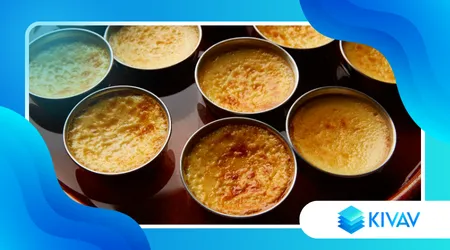
The culinary art is enriched with ancient yet timeless methodologies: among these, the wisdom of The bain-marie technique emerges as a fundamental pillar, ensuring results of unparalleled creaminess.
Announcements
This gentle approach avoids thermal shock, the sworn enemy of more sensitive preparations.
Achieving smooth sauces and perfectly cooked desserts requires mastery, but above all, absolute control over the temperature.
Without a doubt, mastering this method is a hallmark of haute cuisine.
What it is and how it works The bain-marie technique for controlled cooking?
In essence, the bain-marie (from the Latin Balneum Mariae) is an indirect heating system. Water is used as a thermal medium.
Announcements
Gentle preparation is not in direct contact with the heat source. The heated water gradually transfers its heat to the upper container.
The maximum heat it can reach is that of boiling water, about $100^{\circ}C$ at sea level.
++ How to achieve the perfect creaminess for creamy yet not heavy risottos
This limit is crucial due to the delicate nature of the ingredients. It's essential that the container containing the mixture barely touches the water below, without submerging.
This ensures that the heat is transmitted predominantly by steam.
Why great chefs prefer The bain-marie technique for spoon desserts?
The answer lies in the uniformity and slowness of heat release. Ingredients like eggs, often found in custards and puddings, coagulate at relatively low temperatures.
Excessive heat would cause them to solidify unevenly or, worse, make them “go crazy”.
Let's consider the Crème CaramelBaking in the oven always risks overcooking the base and making it spongy. A bain-marie, in the oven or on the stove, surrounds the mold.
The water acts as a thermal cushion, limiting temperature fluctuations. The surface doesn't form that unpleasant film, remaining moist and smooth.
What are the main advantages of using the The bain-marie technique?
The main benefit is the prevention of burning and excessive coagulation. This is vital for compounds high in sugar and fat.
Learn more: Using spices and herbs in Italian cooking
In pastry making, for example, melting chocolate is the most common application.
| Culinary App | Risk Avoided | Result Obtained |
| Melted chocolate | Fat separation and burning | Uniform and shiny melting |
| Zabaglione or egg-based sauces | Sudden clotting and clots | Whipped, velvety consistency |
| Puddings and Flans | Surface crust and hard base | Even cooking and silky interior |
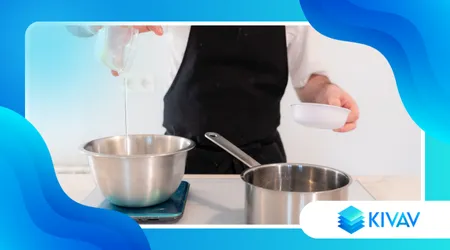
Cheese Fondue.
A fondue requires the cheese to melt without separating its fats. Putting it directly on the stove is a guaranteed disaster; the emulsion breaks.
In a bain-marie, the gentle heat preserves the structure, offering a stringy and homogeneous consistency.
Is there evidence to support the effectiveness of this technique?
Scientific data confirms the superiority of temperature control. Dark chocolate, for example, should never exceed 50-55ºC to maintain its optimal crystallization (tempering).
According to food technology studies, using a bain-marie maintains the temperature of the food between 80ºC and 95ºC.
Interesting: Lemon Tagliolini from the Amalfi Coast
This is a thermal safety range, ideal for melting without damaging the product. Professional pastry chefs prefer the 90% for tempering.
How to avoid common mistakes and perfect The bain-marie technique?
A common mistake is to let the boiling water touch the bottom of the container. Remember, steam is the heating agent.
Water should never boil furiously, only simmer gently. Regulating the heat is crucial; if the water boils too much, the steam will overheat.
Flavored Oil.
Imagine trying to infuse aromatic herbs into extra virgin olive oil. Direct heat would alter the oil's delicate profile, losing its aromas.
The bain-marie allows for a slow infusion at around 80°C, extracting the aromas without degrading the oil. It's the perfect balance between heat and time.
Which complex sauces can benefit from The bain-marie technique?
Think of egg-based emulsified sauces, such as Hollandaise or Bearnaise.
These preparations are notoriously unstable. Adding clarified butter requires patience and minimal heat. Keeping the sauce warm, but not boiling, is the secret.
Water acts as a natural thermostat, protecting the fragile emulsion from excess heat that would immediately cause it to curdle.
Why risk the failure of a delicate sauce when you have such a reliable method at your disposal? Isn't every chef's goal to achieve perfection without wasted effort?
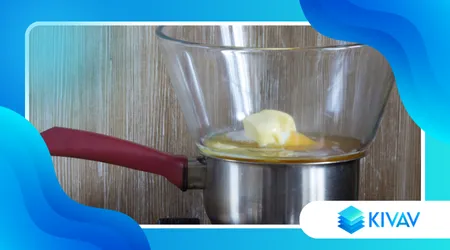
The bain-marie technique
Think of the bain-marie as a wise moderator in a heated discussion. The flame is fervor, a living, uncontrolled fire.
Water, on the other hand, is the moderator that tempers the heat, ensuring a calm and productive conversation (cooking).
This methodology is far from obsolete. It marries beautifully with modern sous vide cooking, the sous vide, also based on precise temperature control.
The bain-marie technique It is testimony that innovations often rediscover the wisdom of the past.
Adopting this method means embracing a culinary philosophy of precision.
Ultimately, mastering the bain-marie technique is essential for anyone who aspires to excellence in the kitchen.
This methodology is not just a historical expedient, but a true thermal precision instrument.
It allows you to transform delicate ingredients into desserts and sauces of unrivaled silkiness, eliminating the risk of burning and unwanted coagulation.
Using a bain-marie ensures impeccable results, a hallmark of a meticulous and attentive chef.
Frequently Asked Questions
How long does it take to melt chocolate in a double boiler?
It depends on the quantity and size, but generally 5 to 10 minutes are enough for 200g of chocolate, mixing gently.
Should the water touch the bowl?
No, the bowl containing the mixture should touch the water or be heated only by the steam. Direct contact transfers too much heat.
Can you use a bain-marie for savory preparations?
Absolutely yes. It is ideal for pate in a terrine, some egg-based sauces or even to keep delicate preparations warm without heating them excessively.
Can I also use the bain-marie for cooling?
Yes, there is a “cold bain-marie” or ice bath, in which hot water is replaced with water and ice to quickly chill mixtures such as zabaglione or creams.
++ The secret to perfect melted chocolate and extra creamy sauces
